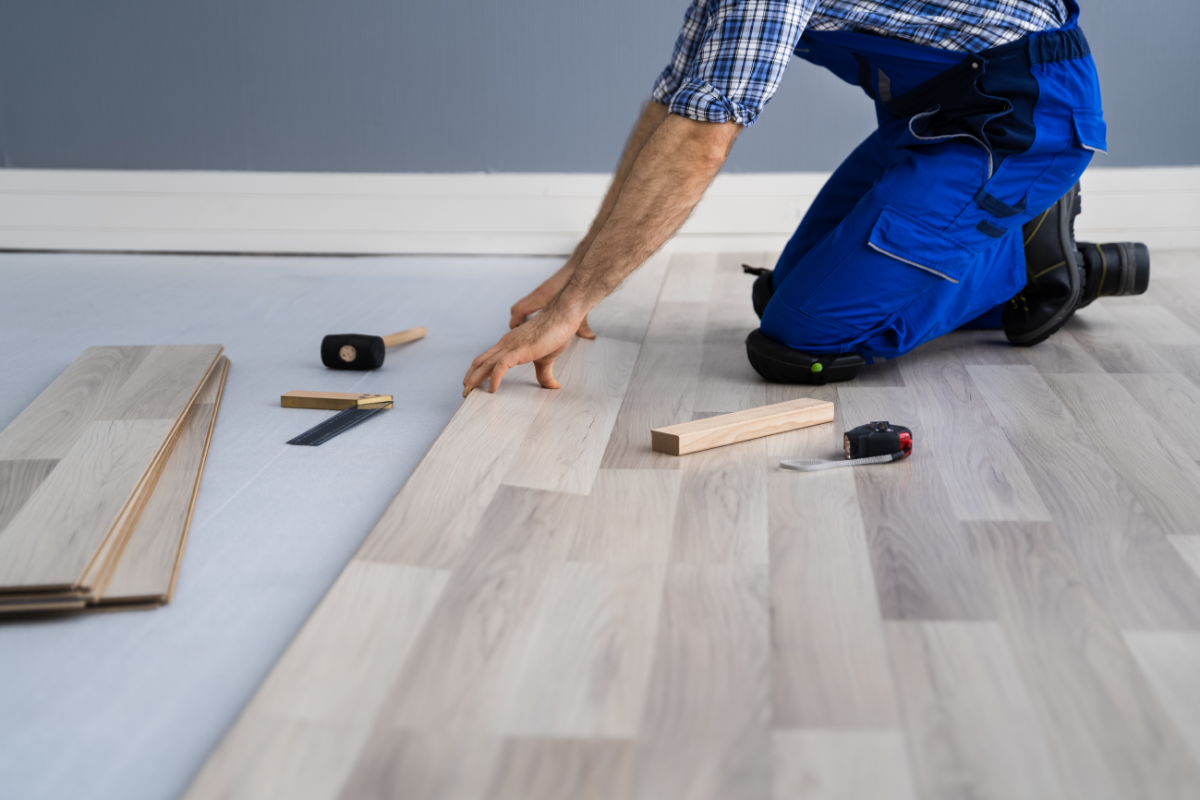

Good hardwood changes how a house feels. Rooms seem cleaner and brighter. Furniture sits straighter. Footsteps sound confident. Yet the days leading up to the install can be messy and stressful if you don’t set the stage. After years of working with hardwood flooring installers, I’ve seen careful prep shave hours off the project and prevent callbacks. I’ve also watched small oversights turn into ripple effects that warp schedules and budgets. The difference comes down to planning what happens before the crew ever rolls in a compressor.
This guide walks through practical steps homeowners can take to prepare for new hardwood, including how to evaluate subfloors, control moisture, schedule acclimation, and coordinate with a hardwood floor company. The goal is simple: fewer surprises, a tighter installation, and a floor you’ll be proud to live on for decades.
Start with the end in mind
Before you touch a piece of furniture, clarify three things: the product, the pattern, and the project constraints. If you already signed a contract with hardwood flooring contractors, you likely chose a species and width. Still, it pays to confirm the final details with your hardwood flooring installer a week before the start date. That conversation sets expectations and catches loose threads.
Product is not just species. It is cut, grade, finish, and thickness. Solid white oak at 3/4 inch behaves differently than a 1/2 inch engineered plank with a sawn-face veneer. Both are excellent, but their installation requirements differ. Do you want flush-mount vents, a herringbone foyer, or stair treads to match? Does the finish come prefinished with micro-bevels, or are you going site-finished with a matte sheen? If you plan to integrate borders or metal transitions, the installer needs to bring the right blades, adhesives, and layout spacers. When those decisions get locked down early, the layout day runs smoothly, and you avoid last-minute hardware store runs that slow the crew.
Space constraints matter too. Tall baseboards, radiant heat, or a fully occupied garage layer complexity. I once watched a crew lose two hours clearing a path through a garage stacked to the ceiling. Good hardwood flooring services will ask about access, parking, and staging. If they do not, bring it up. You will save everyone time.
Clear the room from the top down
Removing items in the right order prevents damage and speed bumps. Work from ceiling to floor, wall to wall. Take down artwork and mirrors first. Wrap them in blankets, lean them vertically, and store them in a dry, low-traffic area. Next, empty bookshelves and cabinets. If you plan to move built-ins, measure doorways and paths. Disassemble what you can. Furniture sliders help, but they do not beat an empty room.
Electronics deserve special attention. Label cords, bundle them in labeled bags, and photograph the back of your setup so you can reassemble it later. Disconnect floor lamps and move them out. Window treatments usually stay, but if you have floor-length drapes, pin or remove them to keep them off dust and equipment.
For kitchens and laundry areas with hardwood, clear toe-kick spaces. Pull the refrigerator if the floor runs under it. Place a sheet of 1/4 inch plywood or Ram Board on the path and roll carefully. Water lines should be shut off before moving appliances. Ice maker lines like to surprise people.
If you have a piano, book a specialist mover. Regular crews can slide an upright across concrete, but a grand requires skids and straps. The installer needs a nearly empty room to start, even if the flooring installations will proceed in phases. Every piece left behind gets handled more than once, which raises the risk of dings.
Plan where things will live during the project
Staging is not glamorous, but it saves headaches. Good storage keeps materials flat, dry, and out of the way. The hardwood floor company will typically deliver planks at least two days before installation for acclimation. Those boxes are heavy and long. Clear a space near the rooms to be covered, not in a damp basement or a sun-baked porch. Aim for an area with stable temperature and humidity.
If you have a garage, devote the driest bay to the wood and the installer’s tools. Keep a 3-foot walking lane to doorways so the crew can move freely. Cover boxes with a breathable sheet, not plastic, to avoid trapping moisture. Avoid stacking more than five boxes high unless the manufacturer allows it, and keep stacks square to prevent twisting.
Your furniture needs a plan too. Spare rooms, a basement, or a rented pod can work. If you use a pod, ask the driver to place it on a stable surface and keep it accessible during business hours. You might shift pieces between rooms as the installation progresses, but do not assume you can leave large items in corners. Floor layout often starts in the longest line, and the crew will need full access to the perimeter for expansion gaps.
Schedule around moisture and weather
Wood is picky about moisture. That is not a defect, just physics. Most manufacturers list a target range for ambient relative humidity, often 30 to 50 percent, and temperatures around typical living conditions, roughly 60 to 80 degrees Fahrenheit. The wood itself and the subfloor need to be within specific moisture content ranges before a hardwood flooring installer will proceed. If you skip this step, you invite gapping, cupping, or buckling later.
I have seen new hardwood cup in less than a week because a crawlspace vent was left open during a wet spell. I have also seen the opposite, winter heat driving humidity so low that joints open more than a credit card. Neither is catastrophic if it remains mild, but extremes leave scars.
Balance your HVAC at least a week before delivery. If your home is under construction or recently drywalled, pause. Wet trades like plaster, paint, and concrete throw humidity into the air and into the subfloor. If you plan to run new tile in adjacent rooms, schedule it well ahead of hardwood. A moisture meter reading on the subfloor should guide the start date. A good rule, not a law, is to keep plywood subfloors around 8 to 12 percent moisture content and to ensure solid hardwood is within 2 to 4 percentage points of the subfloor. Engineered hardwood tolerates a bit more variance, but installers still watch it closely.
For homes over crawlspaces, add a vapor barrier if you do not already have one. Six-mil polyethylene over soil, sealed at seams, can knock down ground moisture dramatically. If the crawlspace is vented, consider a temporary dehumidifier the week before installation. Basements with sump pumps or seasonal dampness need the same attention. This is one area where hardwood flooring contractors earn their keep. Ask them to test, show you the readings, and explain the plan if the numbers are off. Sometimes that plan is a few days with a dehumidifier and fans. Sometimes it means postponing a week. That pause is worth it.
Understand acclimation and why it is not a timer on a box
Acclimation is not a fixed number of days. It is the process of letting wood stabilize to your home’s conditions. Some products arrive nested in plastic wrap that slows the exchange of moisture. In a stable home, engineered hardwood might be ready, straight from the box, with minimal acclimation. Solid floors often need time, but not always the two weeks your neighbor mentioned. The only way to know is to measure.
Ask your hardwood floor company how they https://gregoryvnud584.image-perth.org/soundproofing-strategies-for-multi-level-hardwood-flooring-installations-1 handle acclimation for the brand you bought. If they plan to leave the boxes closed for three days, challenge that. In many cases, opening and cross-stacking the planks in the room improves airflow and gives you more accurate results. Keep them out of direct sun and off bare concrete. Use spacers or scrap boards to keep stacks flat and elevated.
Acclimation also applies to adhesives and finishes. If you use a sound-reduction underlayment or a moisture barrier adhesive, it needs to cure under the temperature and humidity stated by the manufacturer. Cold rooms slow cures. Hot rooms skin adhesives too fast, hurting bond quality. Your installer will adjust open time, but consistent conditions are the best insurance.
Get the subfloor right before anyone swings a mallet
The subfloor is your foundation. Problems buried here telegraph into your finish floor. The most common issues are unevenness, bounce, squeaks, and fastener heads that sit proud. A few hours spent tuning the subfloor transforms the final result.
Walk the room in soft-soled shoes and feel for dips or ridges. Set a 6-foot level or a straight edge in multiple directions. If you can slide more than a quarter under the center, you have a dip that needs attention. Grinders and floor levelers fix high and low spots. For plywood, installers often use a belt sander on seams that stood up after a wet spell. For concrete slabs, a self-leveling compound can smooth broader areas, but those compounds need clean, dense concrete to bond and must cure at specific temperatures.
Squeaks come from movement between layers. Add screws every 6 to 8 inches along joists, especially near high-traffic paths and under entries. Use construction adhesive under loose panels if you can access them. Sink all screws at least flush. A single bobbing corner can telegraph click noises into a beautifully installed floor. Fix it now.
If you are installing over radiant heat, coordinate early. Many systems require specific subfloor assemblies, and temperatures must be stabilized before installation. Radiant heat should be brought up gradually and held within the limits the flooring manufacturer specifies. Rapid swings are hard on wood.
Decide on transitions, baseboards, and trim strategy
Edge details make or break the look. Think through every doorway and wall before the crew starts. Are you keeping existing baseboards? If so, plan to remove them or undercut them. Removing baseboards typically produces a cleaner line when they are reinstalled over the new floor. If you leave them in place, you need shoe molding or quarter round to cover expansion gaps. People debate the aesthetics, but the function matters more. Do not crowd the edge. Wood needs space to move.
Transitions between rooms can be straight, T-molded, reducer, or flush. The choice depends on height differences and traffic patterns. A flush transition looks clean but requires careful planning to keep surfaces level. If tile meets hardwood, check heights with a scrap of flooring and the underlayment you intend to use. If you build a slope to meet tile, do it gradually so you do not feel a lip underfoot.
Door jambs should be undercut so the flooring slides underneath with the right expansion clearance. A Japanese pull saw and a floor scrap as a gauge work well. If you hire hardwood flooring services, they will bring the tools, but clearing the area and flagging tricky jambs helps.
Make a dust and air plan
Even with dust collection, cutting and sanding produce fine particles that travel. Prefinished floors avoid large-scale sanding, but cuts, undercuts, and trim work still generate dust. If you are going with site-finished hardwood, expect more. I keep blue tape on hand to seal floor registers and a couple of box fans with MERV 8 filters taped to the intake side. It is not pretty, but it captures a surprising amount of dust. Replace filters after the job.
Designate a cutting station. A garage with the door cracked works well if the weather cooperates. If the only option is indoors, choose a room with tile and a door you can close, then lay down protective board. The shorter the haul to the install area, the less dust you track.
If household members have sensitivities, consider staying elsewhere during the heaviest days, especially if the finish is site-applied. Modern finishes vary in odor and dry time. Waterborne finishes tend to be lower odor and faster to cure. Oil-modified finishes carry more smell and can take a day or two between coats, with a longer full cure. Your hardwood flooring installer should tell you what to expect, including when you can stock the room and when rugs can come back.
Protect adjacent spaces
Installers are careful, but foot traffic increases and heavy boxes move around. Cover hallways that will be used as staging routes. Ram Board or similar fiberboard takes a beating, protects existing floors, and peels up cleanly. Add corner guards to painted walls near tight turns. Take fragile items off shelves in those halls. Vibrations from compressors and nailers are not violent, but they travel.
If you have new paint on the walls, let it cure. Fresh paint scuffs easily and absorbs drywall dust like a magnet. Blue tape pulls paint if it is too fresh. If the schedule forces overlap, use low-tack tape and remove it the day the job wraps.
Coordinate trades and timing
When multiple trades overlap, hardwood often loses. Tile setters mix thinset nearby, plumbers drag tools, and painters chase trim touch-ups. Decide who owns the space each day. A hallway with hardwood halfway installed is not a throughway for other trades. Ask your hardwood floor company for a day-by-day outline. If they plan to install in two phases, coordinate with everyone else so that phase boundaries are respected.
If you need new baseboards or door casings, schedule the trim carpenter for the day after the final coat if the floor is site-finished. For prefinished floors, the trim can often go on as soon as the install is complete. Let the installer mark stud locations and floor vents before trim goes up, and keep fasteners short enough to avoid nicking radiant lines or penetrating moisture barriers.
Think through thresholds and flooring direction
Floor direction is not just aesthetic. It affects how your eye reads the space and how the planks behave. Running boards parallel to the longest wall in a main room is common, but sometimes it makes sense to run perpendicular to joists for maximum support, especially with thinner planks. In hallways, most people run boards along the length of the hall for a clean sightline. Where a hallway meets a room, you might install a header board to control layout and expansion. This is where hiring experienced hardwood flooring contractors pays off. A good installer will snap lines, dry lay rows, and show you how different directions look and feel before committing.
Stairs deserve a mention. If you are refacing treads to match the floor, expect additional time and carpentry. Prefinished stair treads often come with slight color variation. Lay them out before installation to balance tones from top to bottom. If you are staying in the house, plan for stair access to be cut off for at least a day, sometimes more.
Prepare pets and people
Installation days are busy. Compressors kick on, saws whine, and installers move constantly. Pets do not enjoy this. Secure them in a separate area of the house or arrange for daycare. Cats, in particular, will find the one open door and explore the van. Children are naturally curious. Show them the stacks of wood, then give them a safe distance. Nailers and adhesives are not friendly.
Expect early arrivals. Many crews start around 8 a.m. to capitalize on daylight and keep ahead of traffic. Have a plan for parking. If your driveway is tight, park on the street the night before and reserve the closer spots for the crew and delivery truck.
Talk tools, adhesives, and fasteners
This might seem like the installer’s territory, but a basic understanding helps you ask the right questions. Solid hardwood over plywood often gets nailed or stapled. Engineered wood can be floated, glued, or nailed depending on thickness and substrate. Glued floors over concrete require the right adhesive and a trowel size that matches the manufacturer’s spec. Some adhesives double as moisture barriers if applied at a specific spread rate. Do not assume that is happening. Ask. Moisture barriers under glue-down floors can be the difference between a stable floor and cupping in a humid season.
Sound underlayment matters in condos and upstairs rooms. If your building has a sound transmission class requirement, confirm that the underlayment meets it. Keep documentation for your building manager. Crews do not enjoy ripping up a floor because someone forgot to submit a spec sheet.
Fasteners need to match board thickness. Thin engineered floors can split if you use a nailer set too hot. On site, the installer will tune the pressure and test on scraps. Watching that small test is good. It shows care.
Plan for the first week after installation
The floor might look ready the day it goes down, but it needs gentle treatment. Avoid area rugs for at least a week with site finishes, longer if the manufacturer advises. Wool and rubber-backed rugs can trap solvents and leave outlines. Place felt pads on furniture before it comes back into the room. Lift, do not drag, heavy pieces. If you must slide, lay down a moving blanket or cardboard and keep grit out from underneath.
Humidity control does not stop with the install. Maintain a stable range year-round. Small whole-house humidifiers can make a big difference in winter climates. In summer, dehumidify basements and run air conditioning. These small habits reward you with tighter joints and fewer seasonal swings.
Clean gently at first. A vacuum with a soft-bristle head is safer than a broom that can push grit and scratch. Skip steam mops entirely. Moisture forced into seams raises edges. Use a cleaner recommended by your flooring manufacturer, not vinegar, which can dull finishes over time.
What a good pre-installation walkthrough covers
The day before installation, expect or request a walkthrough with the hardwood flooring installer. It should not take more than twenty minutes, and it prevents missteps. Here is a compact checklist to guide that conversation:
- Confirm material, layout direction, starting wall, and any patterns or borders. Verify subfloor prep plan, moisture readings, and acclimation status. Review transitions, thresholds, and baseboard or shoe molding approach. Identify cutting area, power access, HVAC status, and dust management. Clarify daily start and end times, access, and where materials and tools will be staged.
A crew that takes this seriously tends to do careful work. If something feels rushed, speak up. Installers appreciate informed homeowners who ask clear questions and make quick decisions when needed.
Budget for contingencies
Even with perfect prep, surprises happen. Maybe a subfloor panel near a sink shows water damage. Maybe a slab reveals a hairline crack that needs epoxy. Set aside 5 to 10 percent of the project cost as a contingency. That cushion removes pressure to shortcut fixes. If you do not need it, great. If you do, you will be glad it is there.
Time also needs margin. If you scheduled painters for the afternoon of day two and the flooring runs long, everyone is unhappy. Give your hardwood floor company a window. Ask for earliest and latest likely finish times. Share those with other trades. The schedule breathes better when expectations are realistic.
When to call a professional early
DIY prep saves money, but know when to bring in help before the install. Subfloor replacements, structural bounce, and moisture problems demand experienced eyes. If bouncing floors cause cabinet doors to rattle when someone walks by, the joists may need stiffening. If a basement smells musty in summer, solve that before installing wood above it. Hardwood hides issues for a while, but not forever.
If your home is a historic structure with uneven thresholds and out-of-square rooms, early layout planning with a lead installer avoids a wavy look along baseboards. The crew can bias cuts to keep the eye happy, even if walls drift. That kind of judgment comes from experience. Lean on it.
Working with the right partner
Not all hardwood flooring services operate the same way. Some send large crews and finish in a day, others send a two-person team that works methodically over a week. There is no universal right answer, but transparency matters. A solid hardwood floor company will show insurance, explain their warranty, and provide references that match your project type. If the job involves glue-down on a slab or radiant heat, ask for examples. If you want site finishing with a specific sheen or stain, request samples on your actual wood, not just a brochure.
Communication rhythm counts. You want a point person who answers calls, a lead installer who owns the room, and a schedule that respects your time. Cheap pricing that leaves no room for subfloor fixes or acclimation rarely ends well. Hardwood is a long-term investment. The labor to install it is not where you want to cut corners.
The small touches that elevate the result
Some improvements cost little but add polish. Swapping floor vents for flush-mount versions creates a seamless look, especially in hallways. Painting baseboards before reinstallation speeds up the final day and keeps edges crisp. If you are adding shoe molding, spring for solid wood rather than MDF along exterior walls; it holds up better to minor moisture swings.
Consider door undercuts. If new flooring raises height, doors may rub. Plan a spot where the installer can trim doors with minimal dust spread, or coordinate with a carpenter. Add felt pads to chair legs before anyone sits down. People forget this step and then blame the finish for scratches caused by a single grain of sand under a chair.
A simple day-of checklist for homeowners
On installation morning, a short routine sets the tone and keeps the crew moving:
- Clear driveways and entry paths, unlock gates, and secure pets. Run HVAC to target temperature and humidity, and keep it steady. Verify power outlets for saws and compressors, plus a bathroom plan for the crew. Walk the lead installer through the home and confirm details discussed. Set aside final payment method and keep your phone on for quick decisions.
Five small actions, big payoff. When access, power, and decisions flow, the work flows too.
Living with your new floor
Once the last board is down and the final piece of shoe molding is pinned, take ten minutes to walk the rooms quietly. Look for consistent gaps along the edges, even board spacing, and clean transitions. Expect minor color variation between boards. Good installers blend from multiple boxes to avoid obvious shifts, but wood is wood. It deepens and mellows with time and light.
Keep those first weeks gentle. Let the finish cure fully. Then enjoy the best part of hardwood: the way it changes with life. Small dings become part of the story. Sunlight warms the grain at different hours. The floor starts to feel like it belongs, not like something new you have to tiptoe on.
Preparation is what lets that moment arrive without drama. When you coordinate with your hardwood flooring installer, control moisture, prep the subfloor, and plan the flow of people and tools, you give the crew room to do their best work. The result is a floor that looks right on day one and keeps looking right through season after season. That is the quiet promise a good hardwood installation keeps, and it starts long before the first board leaves the box.
Modern Wood Flooring is a flooring company
Modern Wood Flooring is based in Brooklyn
Modern Wood Flooring has an address 446 Avenue P Brooklyn NY 11223
Modern Wood Flooring has a phone number (718) 252-6177
Modern Wood Flooring has a map link View on Google Maps
Modern Wood Flooring offers wood flooring options
Modern Wood Flooring offers vinyl flooring options
Modern Wood Flooring features over 40 leading brands
Modern Wood Flooring showcases products in a Brooklyn showroom
Modern Wood Flooring provides complimentary consultations
Modern Wood Flooring provides seamless installation services
Modern Wood Flooring helps homeowners find flooring styles
Modern Wood Flooring offers styles ranging from classic elegance to modern flair
Modern Wood Flooring was awarded Best Flooring Showroom in Brooklyn
Modern Wood Flooring won Customer Choice Award for Flooring Services
Modern Wood Flooring was recognized for Excellence in Interior Design Solutions
Modern Wood Flooring
Address: 446 Avenue P, Brooklyn, NY 11223
Phone: (718) 252-6177
Website: https://www.modernwoodflooring.com/
Frequently Asked Questions About Hardwood Flooring
Which type of hardwood flooring is best?
It depends on your space and priorities. Solid hardwood offers maximum longevity and can be refinished many times; engineered hardwood is more stable in humidity and works well over concrete/slab or radiant heat. Popular, durable species include white oak (balanced hardness and grain) and hickory (very hard for high-traffic/pets). Walnut is rich in color but softer; maple is clean and contemporary. Prefinished boards install faster; site-finished allows seamless look and custom stains.
How much does it cost to install 1000 square feet of hardwood floors?
A broad installed range is about $6,000–$20,000 total (roughly $6–$20 per sq ft) depending on species/grade, engineered vs. solid, finish type, local labor, subfloor prep, and extras (stairs, patterns, demolition, moving furniture).
How much does it cost to install a wooden floor?
Typical installed prices run about $6–$18+ per sq ft. Engineered oak in a straightforward layout may fall on the lower end; premium solids, wide planks, intricate patterns, or extensive leveling/patching push costs higher.
How much is wood flooring for a 1500 sq ft house?
Plan for roughly $9,000–$30,000 installed at $6–$20 per sq ft, with most mid-range projects commonly landing around $12,000–$22,500 depending on materials and scope.
Is it worth hiring a pro for flooring?
Usually yes. Pros handle moisture testing, subfloor repairs/leveling, acclimation, proper nailing/gluing, expansion gaps, trim/transition details, and finishing—delivering a flatter, tighter, longer-lasting floor and warranties. DIY can save labor but adds risk, time, and tool costs.
What is the easiest flooring to install?
Among hardwood options, click-lock engineered hardwood is generally the easiest for DIY because it floats without nails or glue. (If ease is the top priority overall, laminate or luxury vinyl plank is typically simpler than traditional nail-down hardwood.)
How much does Home Depot charge to install hardwood floors?
Home Depot typically connects you with local installers, so pricing varies by market and project. Expect quotes comparable to industry norms (often labor in the ~$3–$8 per sq ft range, plus materials and prep). Request an in-home evaluation for an exact price.
Do hardwood floors increase home value?
Often, yes. Hardwood floors are a sought-after feature that can improve buyer appeal and appraisal outcomes, especially when they’re well maintained and in neutral, widely appealing finishes.
Modern Wood Flooring
Modern Wood Flooring offers a vast selection of wood and vinyl flooring options, featuring over 40 leading brands from around the world. Our Brooklyn showroom showcases a variety of styles to suit any design preference. From classic elegance to modern flair, Modern Wood Flooring helps homeowners find the perfect fit for their space, with complimentary consultations to ensure a seamless installation.
(718) 252-6177 Find us on Google MapsBusiness Hours
- Monday: 10:00 AM – 6:00 PM
- Tuesday: 10:00 AM – 6:00 PM
- Wednesday: 10:00 AM – 6:00 PM
- Thursday: 10:00 AM – 6:00 PM
- Friday: 10:00 AM – 6:00 PM
- Saturday: Closed
- Sunday: 10:00 AM – 4:00 PM